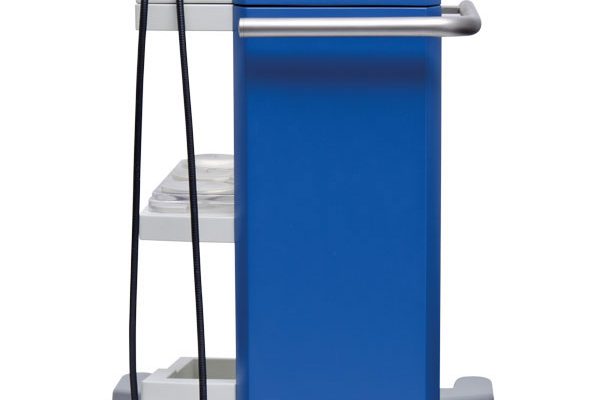
If you’re living with persistent pain that hasn’t responded to rest, traditional physical therapy, or other conservative treatments, shockwave therapy could be the breakthrough you’ve been looking for. At Atlanta Spine & Sport, Dr. Jason M. Bongiovanni uses this advanced, non-invasive technology to treat a wide range of musculoskeletal conditions, helping patients in and around Alpharetta get back to the activities they love without surgery or injections.
Shockwave Therapy in Alpharetta
How does shockwave therapy work?
Cellular functions of our tissue such as growth, cell differentiation, cell migration, protein synthesis, physiological aptosis, and tissue necrosis – are all affected by mechanical stimuli. This is why Shockwave Therapy works. The acoustic waves that the Shockwave Therapy generates penetrate deep into the soft tissue, producing intense, quick bursts of compression. This focused compression created by acoustics is the equivalent of an extremely accurate and intense deep tissue massage.
With this precise targeting of the tissue, we are able to improve circulation to the area and provide pain relief.
When is shockwave therapy used?
Shockwave treatment can be used in many applications. Some use cases include:
- Neuropathy
- Tendonitis of the Shoulder
- Tennis Elbow
- Heel Spurs
- Achilles Tendon Pain
- Chronic Inflammation
- Patellar Tendinitis
- And more!
Click here to learn more about our Shockwave Therapy device, or contact our team to request an appointment today!
Understanding Shockwave Therapy
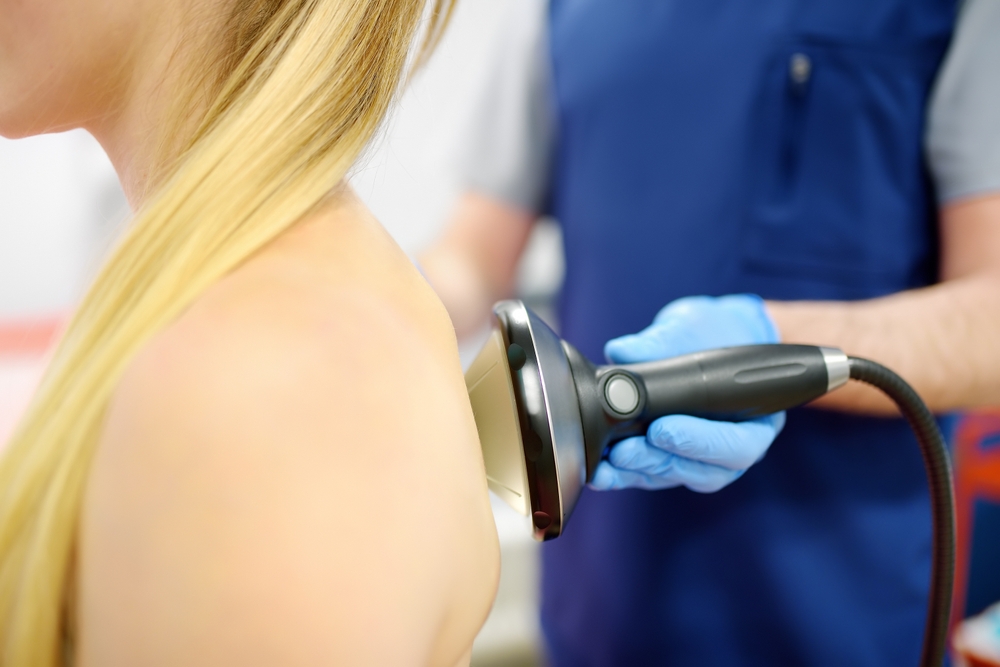
Shockwave therapy, formally known as Myofascial Acoustic Compression Therapy (MyACT), is a non-invasive, sound-based medical technology that delivers high-energy acoustic waves directly to injured soft tissue. These waves penetrate deep into muscles, tendons, and joints, producing rapid, focused bursts of compression similar to an extremely precise deep tissue massage. The therapy is available in two main forms: trigger point therapy, which targets specific knots or tight bands within muscle tissue, and extracorporeal or ESWT, which is applied externally to treat deeper structures like tendons and connective tissue.
What makes this treatment clinically significant is its effect at the cellular level. The mechanical stimulation of acoustic waves influences key biological processes, including how cells grow, repair damaged fibers, and rebuild healthy tissue. It also helps prevent further deterioration in areas of chronic damage. By improving local blood flow, breaking up scar tissue, and reducing inflammation, it supports your body’s own repair mechanisms. It is widely used as a conservative option for patients with musculoskeletal conditions who want to avoid more invasive interventions.
Benefits of Shockwave Therapy
Targeted Pain Relief That Gets to the Source
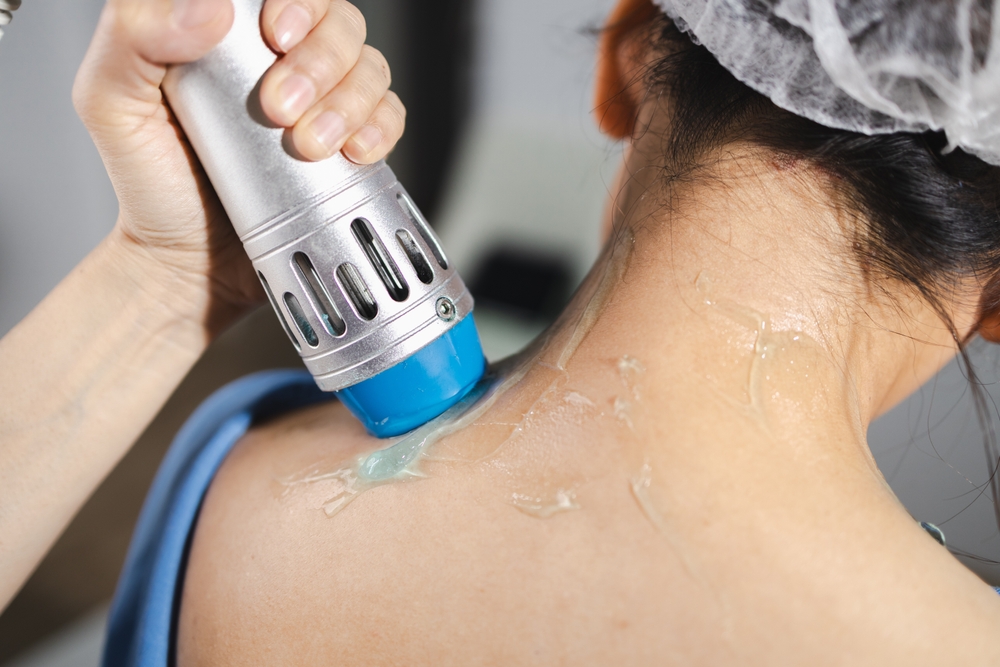
One of the biggest advantages of shockwave therapy is its ability to deliver meaningful relief to the exact location of your injury. The acoustic waves reach deep structural layers that hands-on techniques often can’t access effectively. Patients dealing with chronic discomfort from conditions like tendonitis of the shoulder, patellar tendinitis, or Achilles tendon pain often experience noticeable improvement within just a few treatment sessions. Because the therapy addresses the actual damaged structures rather than just the surrounding area, results tend to last longer than symptom-based approaches.
Accelerated Tissue Repair and Regeneration
Shockwave therapy stimulates the biological processes your body uses to heal itself. The acoustic waves encourage the production of new, healthy fibers to replace damaged ones, prompting recovery at a cellular level. This is particularly valuable for injuries involving connective tissue, where natural healing can be slow due to limited blood supply. By boosting circulation, the therapy creates the conditions your body needs to rebuild faster than it would on its own.
Non-Invasive Treatment with No Downtime
Unlike surgery or injections, shockwave therapy requires no recovery period. Most sessions last just 5 to 10 minutes, and you can return to your normal activities immediately afterward. There are no incisions, no anesthesia, and no medications involved, making it a practical option for patients who want effective care without disrupting their daily lives. The mild to moderate pressure sensation felt during treatment typically decreases as the affected area heals with each subsequent session.
Effective for Both Acute and Chronic Musculoskeletal Conditions
Shockwave therapy is versatile enough to address a broad spectrum of injury types. Whether you’ve recently strained a tendon or have been managing chronic neck and back pain for years, the therapy adapts to your specific needs. Conditions that often resist conventional treatment, such as heel spurs, plantar fasciitis, tennis and golfer’s elbow, Achilles’ tendonitis, and rotator cuff tendinopathy, respond particularly well to focused acoustic compression. It’s a strong clinical option when other approaches have fallen short.
Improved Circulation to Support Long-Term Healing
Chronic stiffness and recurring discomfort often persist because damaged structures don’t receive adequate blood flow to recover fully. Shockwave therapy directly addresses this by stimulating circulation in the treated area, delivering the oxygen and nutrients that repair demands. Improved blood flow also helps clear out inflammatory byproducts that contribute to ongoing symptoms. Over the course of your sessions, this enhanced circulation supports lasting structural health rather than providing only temporary relief.
Our Shockwave Therapy Process
Understanding Your Pain History and Movement Patterns
Your care begins with a thorough evaluation so Dr. Bongiovanni can fully understand your symptoms, their history, and what has or hasn’t worked before. He will assess your posture, movement patterns, and the affected area from a biomechanical perspective. This full-picture approach ensures shockwave therapy is the right fit for your specific condition before any treatment begins.
Building a Shockwave Treatment Plan Around Your Condition
No two patients present the same way, and your treatment plan will reflect that. Based on your evaluation findings, Dr. Bongiovanni will identify the precise structures requiring acoustic wave therapy and determine the appropriate intensity and frequency for your situation. Whether you’re managing a musculoskeletal injury like a torn rotator cuff or a chronic issue like recurring heel pain, your plan is built around your individual recovery goals.
Applying Focused Acoustic Waves to Injured Tissue
During each session, our shockwave system delivers focused acoustic waves to the affected area with care and control. The experience is often described as deep pressure, brief and manageable, with sessions typically lasting under 15 minutes. When appropriate, Dr. Bongiovanni may incorporate chiropractic adjustments or additional in-office modalities to broaden the scope of your care.
What to Do After Each Session to Support Healing
After your session, mild soreness in the treated area is normal and indicates the repair process has been activated. You’ll receive specific guidance on activity levels, stretching, and home care practices to support recovery between visits. Staying hydrated and limiting high-impact activity on the treated area for a day or two helps your body respond well to each session.
Reviewing Results and Keeping Your Recovery on Course
Progress is monitored closely so adjustments can be made as your recovery unfolds. Dr. Bongiovanni will track your pain levels, range of motion, and functional improvements to confirm the therapy is working as expected. Follow-up appointments provide the opportunity to refine your plan and ensure you’re moving steadily toward full recovery.
Why Choose Us for Shockwave Therapy
Shockwave therapy produces the best outcomes when the provider understands the biomechanical factors driving your pain, not just the technology being applied. Dr. Bongiovanni conducts a comprehensive evaluation before every course of treatment, assessing posture, movement mechanics, and the relationship between your muscular and skeletal systems. That level of diagnostic depth allows him to apply acoustic wave treatment where it will be most effective for your specific presentation.
His clinical background includes eight years as the official team chiropractor for an NHL franchise, along with extensive work treating professional athletes across football, baseball, and other physically demanding sports. That real-world experience sharpens his ability to identify how soft tissue injuries develop, compensate, and respond to care over time. For every patient, it means treatment parameters, including intensity, frequency, and focus area, are set based on your condition and recovery timeline, not a standard protocol. Where beneficial, the therapy is paired with corrective rehabilitation exercises to address the movement contributors to your injury, reducing the likelihood of recurrence.

Get Started with Shockwave Therapy in Alpharetta for Real Relief and Stronger Recovery
Persistent pain limits what you do, how you move, and how you feel each day. Shockwave therapy offers a clinically proven, drug-free path to real structural repair, and Dr. Jason M. Bongiovanni has the training and hands-on experience to deliver it with confidence. Our team is ready to help you move better, feel stronger, and get back to the life chronic pain has been keeping you from.
Find our Alpharetta clinic on Google Maps and follow us on Facebook and Instagram, where we share treatment insights and recovery wins from our own patients. Read through honest, firsthand feedback on Google Reviews and Yelp to get a true sense of the care waiting for you here. We have helped patients across Alpharetta recover from conditions just like yours. The sooner you reach out to us at 678.620.3668, the sooner real recovery begins.
Book Appointment
FAQs
What types of injuries respond well to shockwave therapy?
Shockwave therapy is particularly effective for stubborn soft tissue injuries that haven’t improved with rest or conventional care. Common examples include plantar fasciitis, heel spurs, tennis elbow, Achilles’ tendonitis, rotator cuff tendinopathy, chronic neck and back pain, and patellar tendinitis. Both recently developed injuries and long-standing conditions can benefit, depending on the nature and severity of the damage involved.
How many treatment sessions will I need?
The number of sessions varies based on your specific condition, how long it has been present, and how your body responds over time. Some patients notice meaningful improvement within just a few visits, while more complex or chronic cases may require additional sessions. Dr. Bongiovanni will outline realistic expectations during your initial evaluation, based on what he finds during your assessment.
Is shockwave therapy painful?
Most patients describe the sensation as moderate pressure, more intense than a standard massage but entirely manageable. Any discomfort is brief and typically lessens with each visit as the affected structures begin to respond. If the pressure feels too strong during a session, the intensity can be adjusted without compromising the effectiveness of the treatment.
How does shockwave therapy work differently from manual treatment methods?
Manual approaches like massage work primarily at surface level through physical pressure applied by hand. Shockwave therapy uses high-energy sound waves to reach deep structural layers, directly stimulating the body’s natural repair process, clearing scar tissue, and improving circulation in ways that manual methods cannot replicate. Rather than providing temporary relief, the therapy promotes genuine structural recovery by encouraging the body to rebuild damaged tissue from within.
Can shockwave therapy be used alongside other chiropractic treatments?
Yes, and combining approaches often produces stronger, more lasting outcomes. At our practice, shockwave therapy is frequently integrated with corrective rehabilitation exercises to resolve both the damaged structures and the underlying movement imbalances that contributed to the injury. This comprehensive approach is especially effective for recurring or complex conditions where a single treatment method is unlikely to address the full picture.